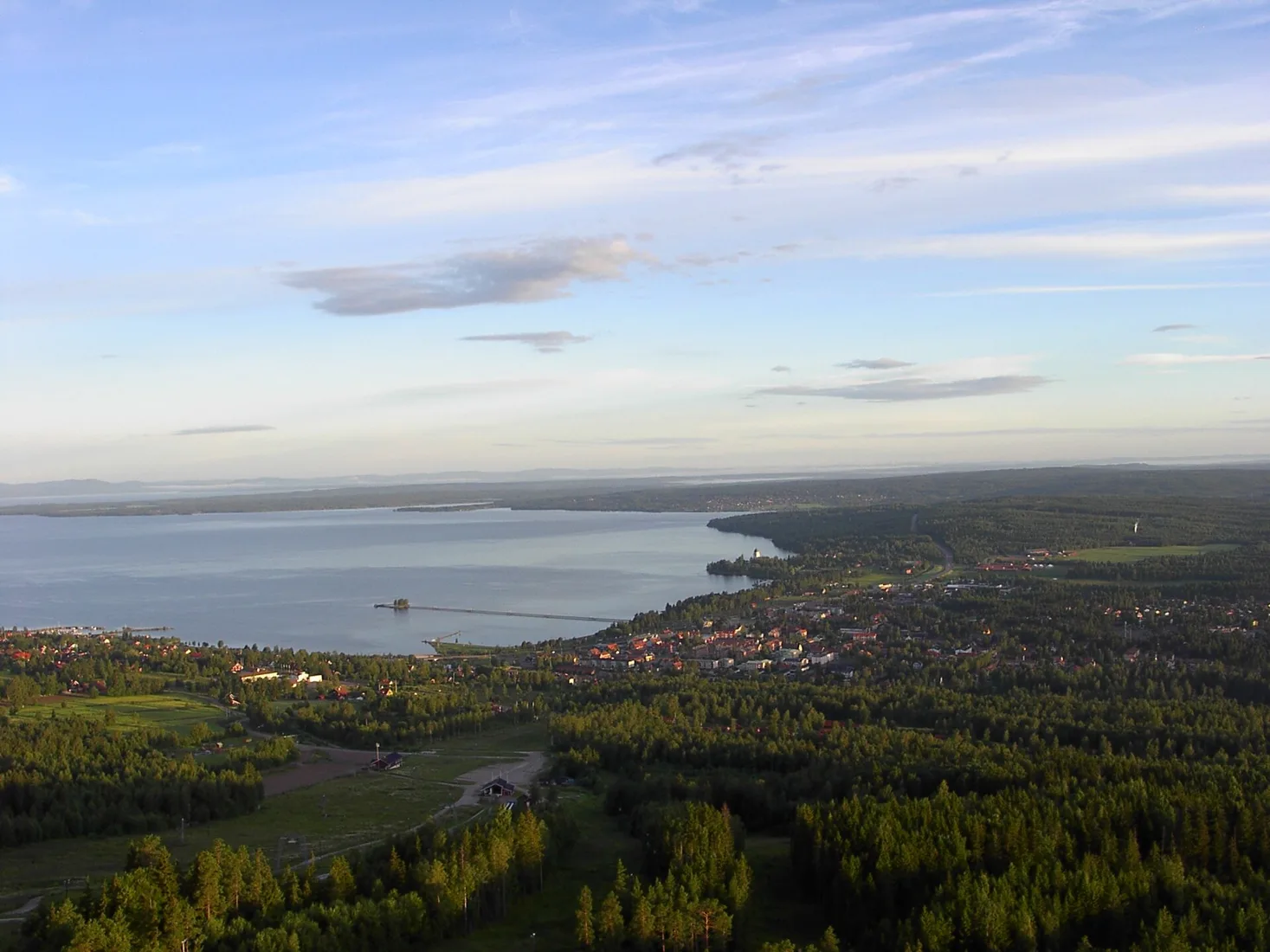
Central Falun rewards a walk that follows the city’s changing character rather than a rigid checklist. The Faluån river, the formal spaces around Stora Torget and the old wooden neighbourhoods are close enough to connect on foot for many visitors. Allow a relaxed half-day, with pauses, and check your route against a current map before setting out.
Use the river as your starting point
Begin near the Faluån and take a moment to orient yourself. The river helps make sense of the centre: bridges link shopping streets and civic spaces, and short waterside stretches break up the busier roads. Follow public paths rather than assuming every stretch of bank is accessible.
From here, move towards Stora Torget. Notice how the town opens into a larger, more formal square. It is a useful place to pause, look at the surrounding façades and decide whether you want a café stop before continuing.
Look up around Stora Torget
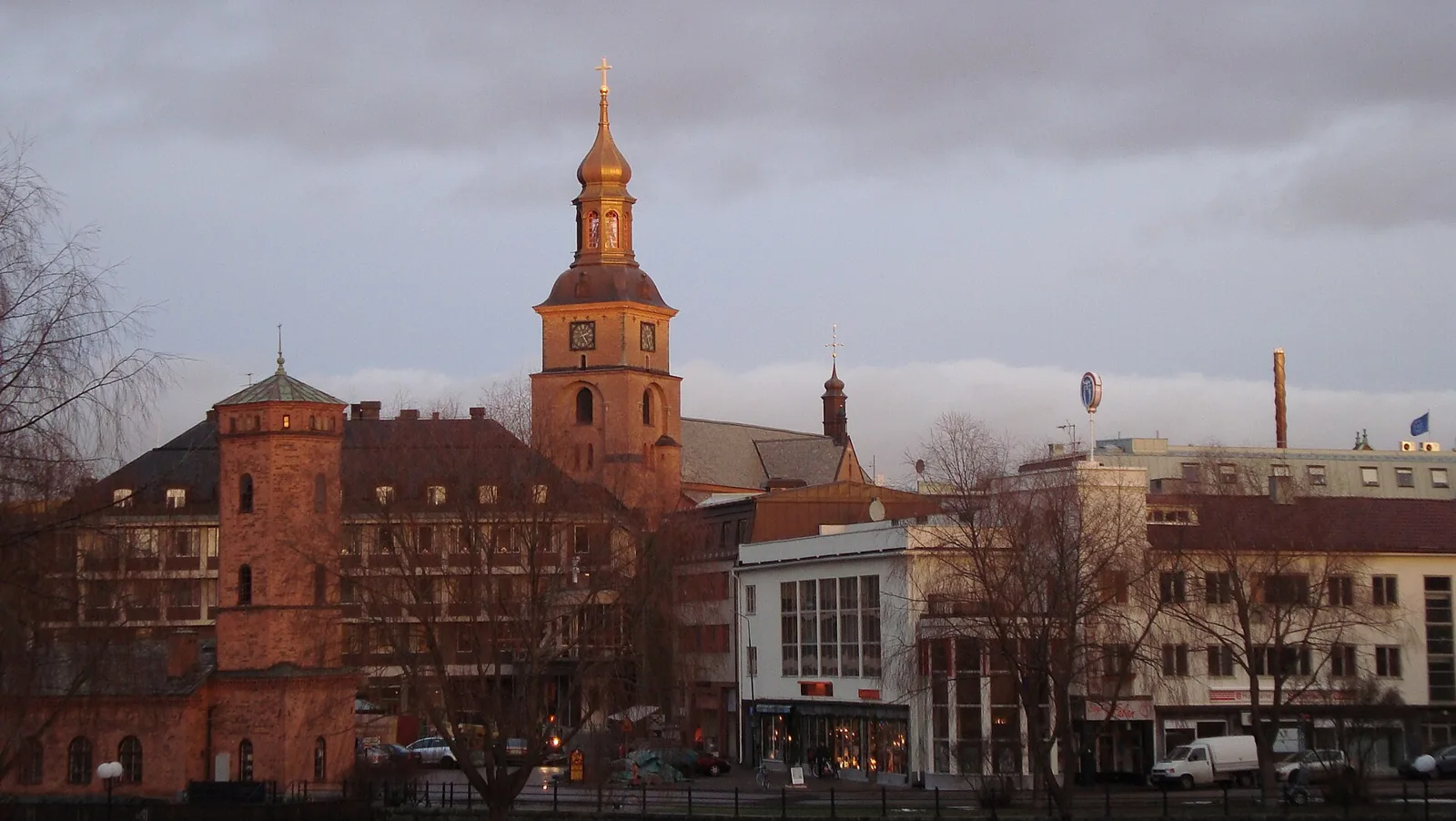
Kristine Church is one of the square’s defining landmarks. Its brick exterior gives the centre a different texture from the timber buildings you will meet later. If the church is open to visitors, enter quietly and respect services; an interior visit should be a possibility, not the condition for enjoying the walk.
The nearby streets are worth exploring slowly. Look for variations in rooflines, doorways and building materials instead of searching only for famous sights. A short detour often gives a better impression of a town than a photograph taken from the same spot as everyone else.
Continue into the wooden neighbourhoods
Head towards Elsborg for smaller houses and a more intimate streetscape associated with Falun’s mining past. These are lived-in streets, not an outdoor museum. Keep to public roads, avoid photographing through windows and give residents plenty of space.
The mine can be a separate extension, but do not underestimate slopes or the time needed for a booked visit. If energy or weather argues against continuing, finish with lunch in the centre. Wear shoes with grip, take care on ice in colder months, and use crossings on busier streets. For reduced-mobility visitors, check surfaces and gradients before committing to the full route.